Behind the Screens: Compliance Tools Orchestrating Game Feeds and Payment Rails in Mobile iGaming
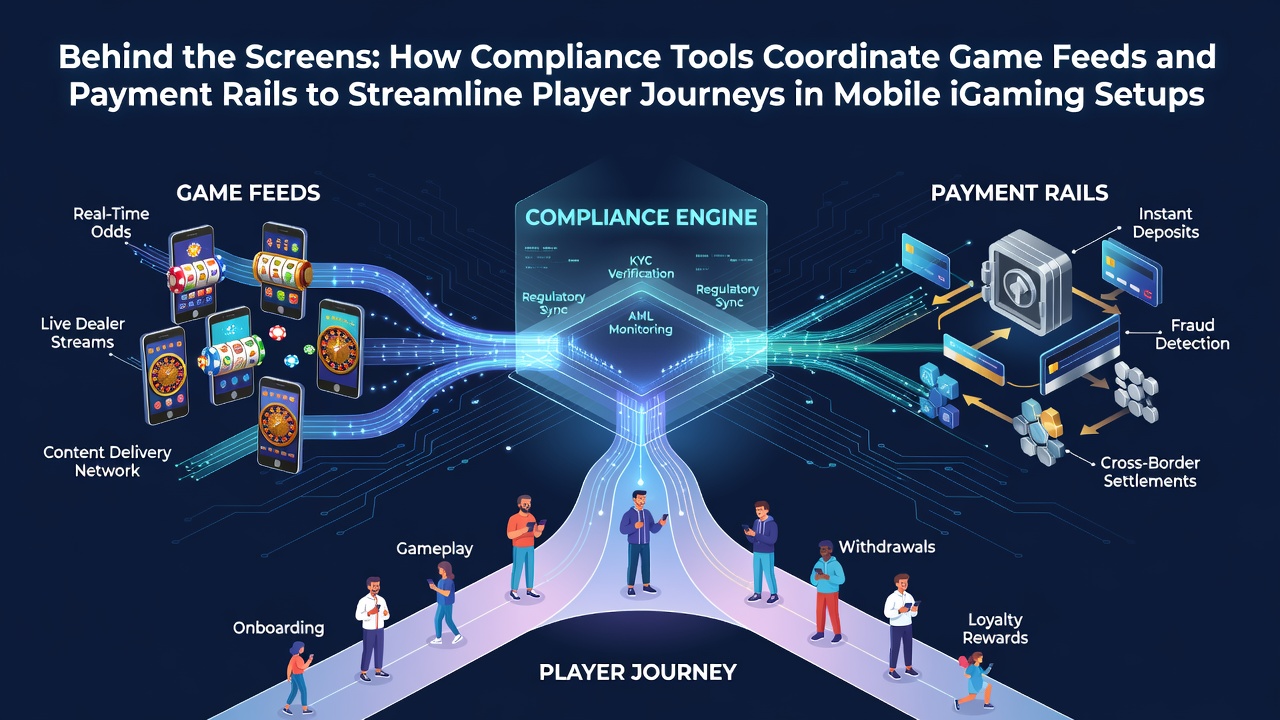
Compliance tools sit at the center of modern mobile iGaming operations, linking game feeds from multiple suppliers with payment rails to create uninterrupted player journeys while meeting regulatory standards across jurisdictions. These systems handle real-time verification of game outcomes, transaction monitoring, and identity checks without interrupting the flow from game selection to deposit and withdrawal.
Core Coordination Mechanisms
Backend platforms receive continuous data streams from game providers, process them through compliance engines, and route approved transactions through payment gateways in a single coordinated sequence. Observers note that this integration reduces latency because compliance checks run in parallel with game loading and payment authorization rather than in sequence. Data from the European Gaming and Betting Association shows that operators using unified compliance layers report fewer session interruptions during November 2026 compared with fragmented setups.
Game feeds carry outcome data, RTP values, and player activity logs that compliance modules evaluate against jurisdiction-specific rules before any funds move. Payment rails simultaneously receive tokenized player details and transaction amounts, allowing the same compliance layer to flag suspicious patterns across both game behavior and financial movement in one pass.
Payment Rail Integration Points
Payment processors connect directly to the compliance framework so that every deposit triggers an immediate cross-check against game history and regulatory blacklists. This setup lets operators maintain separate banking partners while routing all traffic through a central compliance node that applies consistent rules regardless of the rail chosen by the player. Researchers tracking mobile-first platforms have documented how this architecture supports instant deposits in markets where regulators require real-time responsible gaming limits.
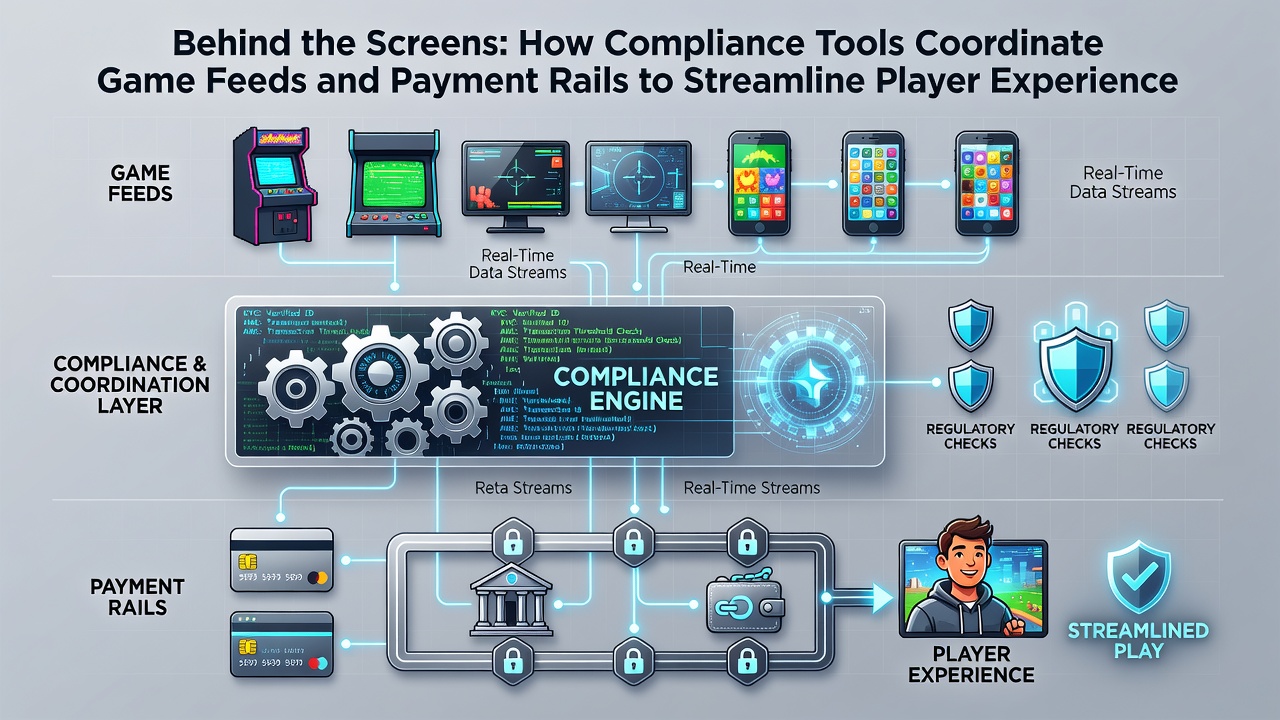
Operators often segment traffic by region so that a single compliance tool can apply different rule sets depending on the player’s location detected at login. The result is that a player moving between two licensed markets experiences consistent game access and payment options without manual intervention from support teams.
Streamlining Player Journeys
Players encounter fewer verification prompts because compliance tools cache validated data and share it securely between game and payment modules. When a player completes an initial KYC check, the system stores the result and reuses it for subsequent deposits or game launches, cutting average onboarding time. Industry reports from the Malta Gaming Authority indicate that platforms with tight compliance-to-payment linkages see higher completion rates for first-time deposits in the same month.
Game feeds update player balances and session statistics in real time, while payment rails confirm fund availability before the next spin or hand begins. This closed loop prevents overdraft situations and keeps gameplay within pre-set responsible gaming parameters without additional player action.
Regulatory Alignment Across Regions
Compliance platforms must accommodate multiple regulatory frameworks simultaneously because mobile players frequently access services from different countries. Tools that map regulatory requirements to specific data fields allow the same backend to satisfy both US state-level reporting and EU data protection rules without code changes for each new market. According to analysis from the National Council of Problem Gambling, synchronized compliance and payment data streams help operators meet mandatory reporting deadlines with greater accuracy.
November 2026 brought increased focus on cross-border data handling after several jurisdictions updated their technical standards for mobile gaming. Platforms that already maintained unified compliance layers adapted faster because game outcome logs and payment records resided in one auditable system rather than scattered across separate databases.
Conclusion
Compliance tools that coordinate game feeds and payment rails create measurable efficiencies in mobile iGaming environments by reducing friction points and supporting regulatory compliance at every step of the player journey. The architecture continues to evolve as operators add new game suppliers and payment options, yet the core principle remains constant: one integrated compliance layer governs both entertainment content and financial movement to deliver consistent, lawful experiences across devices and borders.